

Constructing a viol front using the 5 piece bent front technique
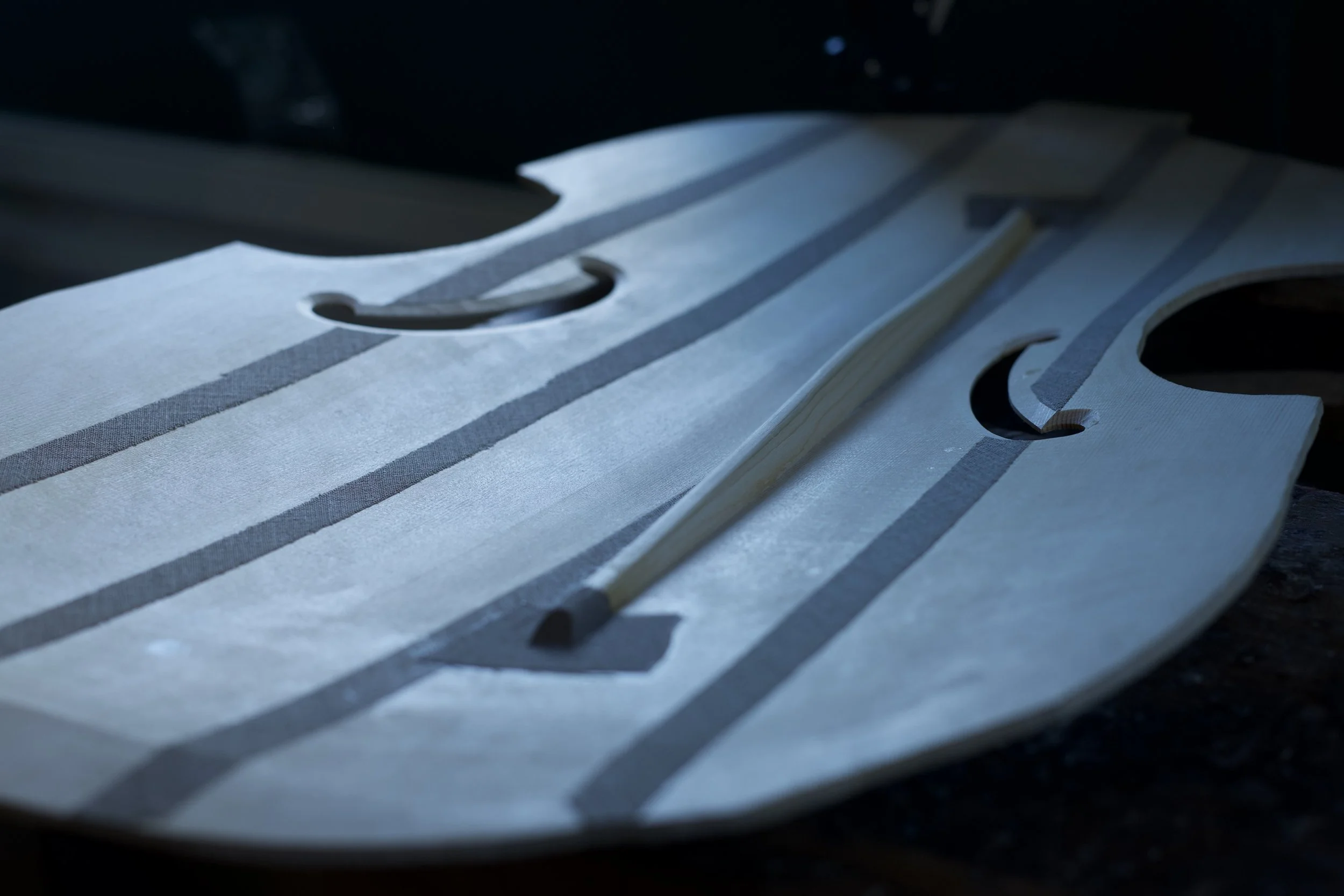
Constructing an instrument front by steam-bending wooden staves was a technique commonly used in viol making during the 17th and 18th centuries. This method differs significantly from the carved-front construction and offers several important advantages.
Because the staves are bent rather than carved, the wood fibres remain continuous and intact along the entire length of the front. This allows the front to be made thinner and lighter while retaining the full natural strength and structural integrity of the wood.
A lighter front has numerous sonic advantages. When the front of an instrument is made lighter, it becomes more responsive, allowing it to vibrate more freely and resonate more fully. This increased resonance enhances the richness and clarity of the sound, producing a more vibrant and dynamic tonal range. Additionally, lighter fronts respond more quickly to the player’s touch, offering greater sensitivity and subtlety in expression. In practical terms, this means that even delicate nuances in playing are more easily transmitted through the instrument, resulting in a sound that feels alive and engaging.
A further advantage of this method is the substantial reduction in material waste. For a bass viol front, each stave has a starting thickness of around 6 mm giving a quantity including all 5 staves around 30 mm x 10 mm x 60 mm. This equates to about a 3rd of material used to make a cello front. This minimising waste enormously, offering a positive environmental impact.
The use of bent staves is therefore not only an efficient and sustainable method of construction but also an important factor in producing the distinctive sound associated with the viol and the broader musical aesthetic of the Baroque period.
Constructing a viol without the use of an internal mold
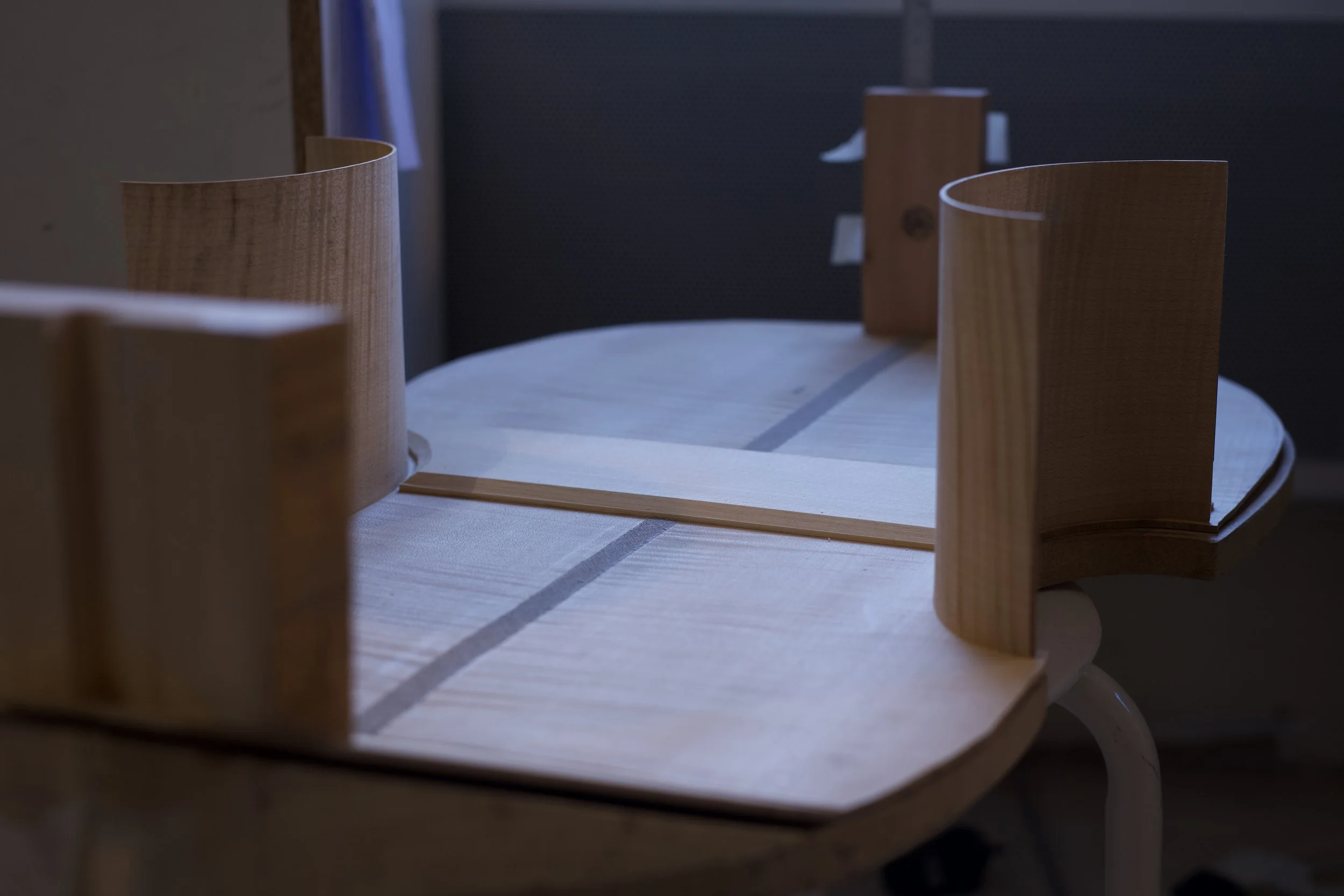
When observing viols made during the 17th and 18th century we are able to see some notable differences in construction between the instruments of the viol family and those of the violin family.
Notable differences include the absence of internal corner blocks as well as the use of linen over linings where the ribs meet the back. These observations along with the fact that no internal viol mold exist from this period suggest a construction method that didn’t include the use of a mold.
Building viols this way means there are inherant nuances and asymetries that are simply a part of the process and in my opinion are likened to the asymetries that are found in nature and humans alike. The luthiers task is to make instruments as symmetrical and perpendicular as possible and the anomalies that occur are simply a result of this construction method. It is precisely this that gives instruments made this way, their unique individual character.
To me, this aspect of instrument making reinforces the idea that no two instruments are the same, allowing the instrument to take a form of itself from the very beginning. Instruments constructed in this way are lightweight and have excellent resonance.